Dead Companies
The archive

Every story, newest first

8 stories so far. Each page has the video, the key moments and the full story to read.

  • Obituary No. 0087:05

    Pan Am Owned the Sky. One Rule Killed It

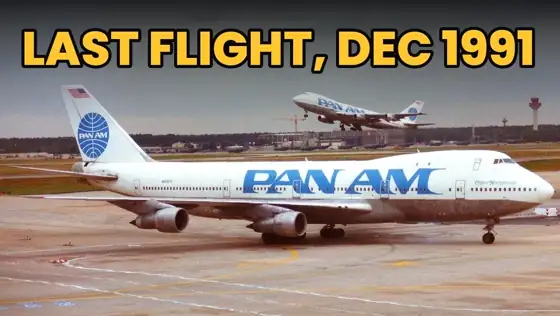
    Pan Am launched the jet age, ordered the first 25 Boeing 747s for $525 million, and was the most famous airline on Earth. Then it spent a decade selling everything it owned to stay alive. On December 4, 1991, its last flight landed in Miami. The bomb over Lockerbie didn't kill Pan Am. A rule written in 1927 did.
  • Obituary No. 0076:52

    Nokia Built a Touchscreen Phone in 2004, Then Killed It

    In 2007 Nokia sold 4 out of every 10 phones on Earth and more than half of all smartphones. Six years later its phone business was sold to Microsoft for $7.2 billion, and two years after that Microsoft wrote almost all of it off. Nokia had a touchscreen phone with an app store in 2004. This is why it never shipped.

  • Obituary No. 0067:20

    MySpace Wasn't Killed by Facebook. It Was a $900M Deal

    In 2006 MySpace was the most visited website in America, bigger than Google, with 100 million accounts. Five years later it sold for $35 million, a 94% loss for News Corp. Facebook didn't kill it. A $900 million Google deal did, and almost nobody noticed at the time.

  • Obituary No. 0057:07

    Lehman Didn't Die From Subprime. This Is What Killed It

    In 2007 Lehman Brothers made a record $4.2 billion profit and its CEO was paid $22 million. Twelve months later it filed the largest bankruptcy in history, with $639 billion in assets and 25,000 employees. Everyone blames subprime mortgages. The real killer was $31 borrowed for every $1 it owned, and one bet made at the very top of the market.

  • Obituary No. 0046:29

    Circuit City Fired Its Best Salespeople, Then Died in a Year

    On March 28, 2007, Circuit City fired 3,400 of its best-paid salespeople in a single day to save money. Twenty months later, the 12-billion-dollar electronics chain that a bestselling business book called great was bankrupt, and 34,000 people were out of work. This is how a company that was studied as a model of greatness managed to kill itself.

  • Obituary No. 0036:33

    Borders Handed Its Website to Amazon, Then Died

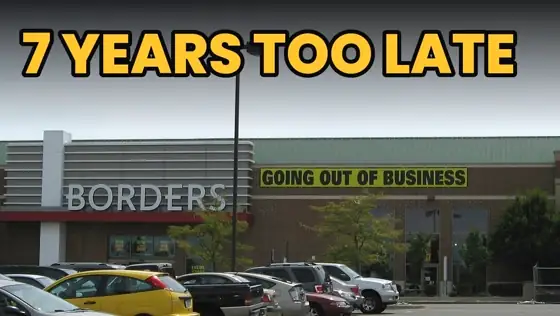
    In 2001, the second-largest bookstore chain in America handed its entire online business to Amazon and said thank you. Borders had 1,249 stores and 4 billion dollars a year in sales. Ten years later it owed 1.29 billion dollars and 10,700 people lost their jobs in a single summer. This is how a bookstore paid its killer to run the store.

  • Obituary No. 0026:12

    BlackBerry Didn't Lose to the iPhone. It Lost Its Customer

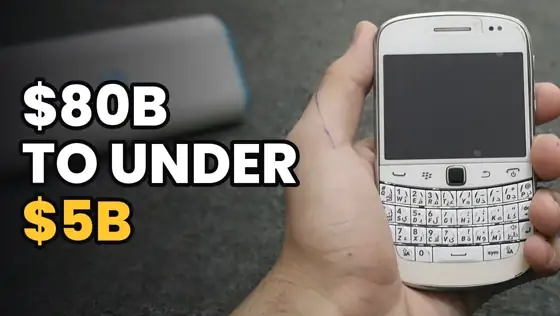
    In early 2010, 43% of American smartphone owners carried a BlackBerry. By 2016 its global share was zero. It had touchscreens, it had the President, and it had nearly 20 billion dollars a year in revenue. This is why none of that mattered once employees stopped asking the IT department for permission.

  • Obituary No. 0015:56

    Kodak Invented the Digital Camera, Then Hid It

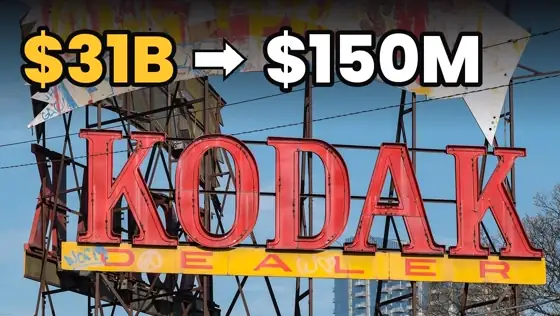
    In 1975, a 24-year-old Kodak engineer built the world's first digital camera. His bosses told him to hide it. Kodak owned 90% of the film market, employed 145,000 people, and still went bankrupt. This is how the company that invented the future refused to sell it.