Dead Companies
The full story
The memo
On the morning of February eighth, 2011, Nokia employees opened an internal memo from their new chief executive. It compared the company to a man standing on a burning oil platform in the North Sea, with one choice left: jump into the freezing water.
Nokia was still the biggest phone maker on Earth. It sold more phones than Apple and Samsung combined. Three days later, it announced it was abandoning its own software and betting everything on Microsoft.
Within three years the phone business was sold for a fraction of what it had been worth, and a name that had lived in a billion pockets vanished from the shelves. Most people blame the iPhone. The iPhone is not what killed Nokia.
The empire
Nokia began in 1865 as a paper mill on a river in Finland. Over a century it made rubber boots, cables, televisions, and toilet paper. In the early 1990s, close to collapse, it bet the whole company on mobile phones.
The bet paid off like almost nothing in business history. In 1998, Nokia passed Motorola to become the largest phone maker in the world. Its ringtone became the most-played piece of music on the planet.
By 2000 Nokia was worth around two hundred fifty billion dollars, the most valuable company in Europe. One firm produced roughly four percent of Finland's entire economy and a fifth of its exports.
At the end of 2007, Nokia sold four out of every ten phones on Earth. In smartphones, its share was over fifty percent. Revenue that year was about fifty-one billion euros.
Its basic model, the Nokia eleven hundred, sold two hundred fifty million units, more than any consumer electronics device ever made. It was cheap, nearly indestructible, and ran for a week on a single charge.
The future, early
Here is the uncomfortable part. Nokia saw the future first. In 2004, its engineers showed executives a phone with a touchscreen, a single button, and an online store for apps.
Management killed it. Too expensive, too risky, too far from the phones that were selling. A tablet and an internet device met the same fate. Three years later, Apple shipped the iPhone.
Nokia's engineers were not the problem. Nokia held more wireless patents than almost anyone, and it had built one of the first smartphones in 1996. The problem was what happened in the rooms where decisions were made.
The fear
Years later, researchers at a top European business school interviewed seventy-six Nokia executives, managers, and engineers. What they found was not arrogance. It was fear.
Middle managers were afraid to tell top executives bad news. Top executives were afraid of losing to Apple. So teams reported progress that did not exist, and the software kept slipping.
That software was called Symbian. It was built for small keypad phones, not for fingers on glass. Nokia knew it needed a replacement and started one in 2005. It still was not ready in 2010.
Meanwhile the iPhone arrived in 2007 and Android in 2008. Nokia executives dismissed the iPhone as a niche gadget that did not even support fast data. And for a while, Nokia's phone sales kept rising. Until they didn't.
The jump
In September 2010 the board hired the first non-Finnish chief executive in Nokia's history: Stephen Elop, an executive from Microsoft.
Five months later came the burning platform memo. It leaked within hours. Elop had told the world that Nokia's software was dead, before Nokia had anything ready to replace it.
Economists call this the Osborne effect. Tell customers your product is finished, and they stop buying it immediately. Symbian sales collapsed within months, while the first Windows phones were still most of a year away.
Elop had considered Android. He feared Nokia would become just another Android maker, lost among dozens. Microsoft offered a billion dollars a year in support instead. Nokia took the money.
The first Lumia launched in late 2011. Reviewers liked it. Few people bought it. Between 2011 and 2013 Nokia cut more than twenty thousand jobs, and its stock, forty dollars in 2007, was under two by 2012.
Finland's most famous company was downgraded to junk status. Windows Phone, the platform it had jumped onto, never captured more than a few percent of the market.
The sale
On September third, 2013, Microsoft agreed to buy Nokia's phone business for about seven point two billion dollars. Around thirty-two thousand employees changed badges. Elop went back to Microsoft.
Less than two years later, Microsoft wrote off about seven point six billion dollars, more than it paid, and laid off seven thousand eight hundred people. In 2016 it sold what remained for three hundred fifty million dollars.
Since 2016, Nokia-branded phones have come from a small Finnish startup that licenses the name. The company that actually built those phones is gone.
The twist
So the villain is Elop, or the memo, or Apple. But look at the timeline again. Nokia's market share peaked at the end of 2007, six months after the iPhone. And its sales kept rising through 2008.
The slide began in 2008, before Android was a real competitor. Nokia was losing to itself. It launched dozens of different phone models a year, each with slightly different software, and none of them great.
By the time the memo came, the fear had already cost the company five years. The memo did not start the fire. It just told everyone the building was burning, and then opened all the doors.
What survived
Here is the part most people miss. Nokia did not go bankrupt. It sold the phones, bought a telecom network business, and today it builds the equipment that carries mobile data around the world.
It earns about twenty billion euros a year. It is still Finland's most famous company. It simply stopped being the thing the world knew it for.
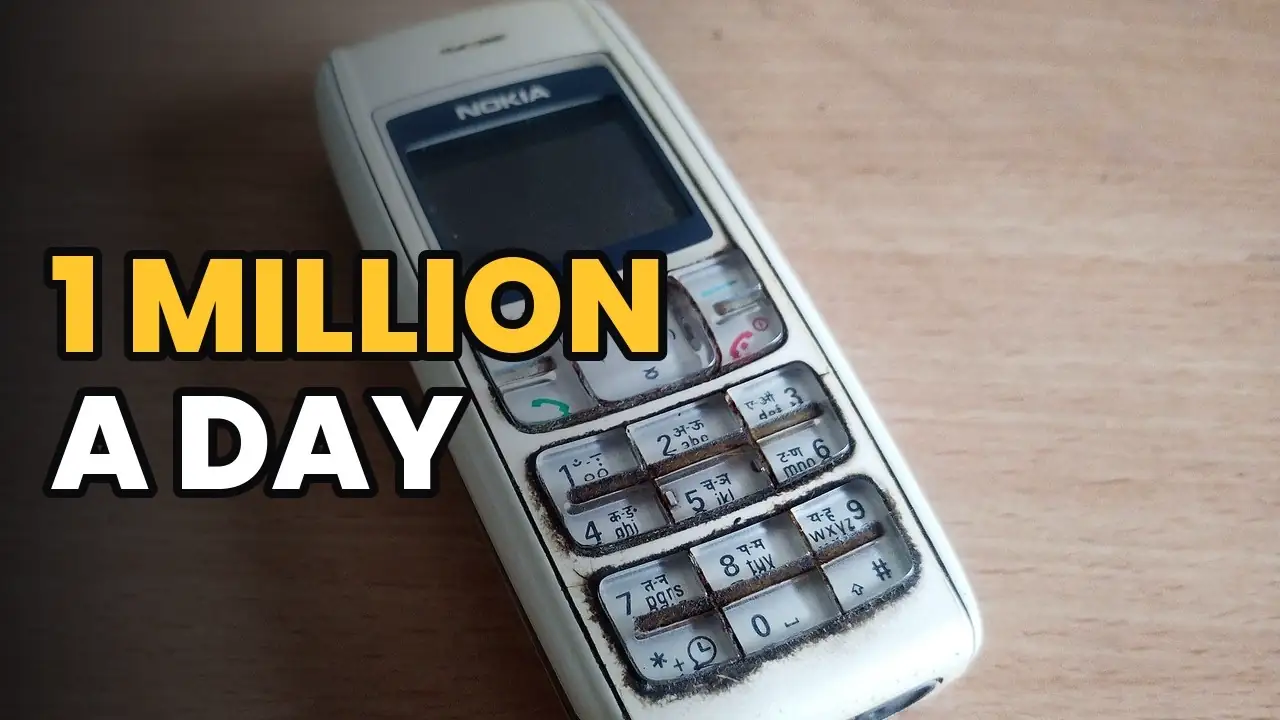
In 2016, a group of former Nokia managers founded a startup, licensed the name, and began selling Nokia phones again. They have never come close to what Nokia once sold. In 2007, Nokia sold more than a million phones every single day.
In 2017 the startup re-released the old Nokia thirty-three ten as a nostalgia product. People queued for it. Not because it was the future, but because it reminded them of a time when the future was Finnish.
So did Nokia die because of the iPhone? No. Nokia had the touchscreen three years before Apple. It died because for five years nobody inside was allowed to say the software was broken, and when someone finally said it, he said it to the world.